Emerald Buying Guide: How to Judge Colour, Clarity and Cut
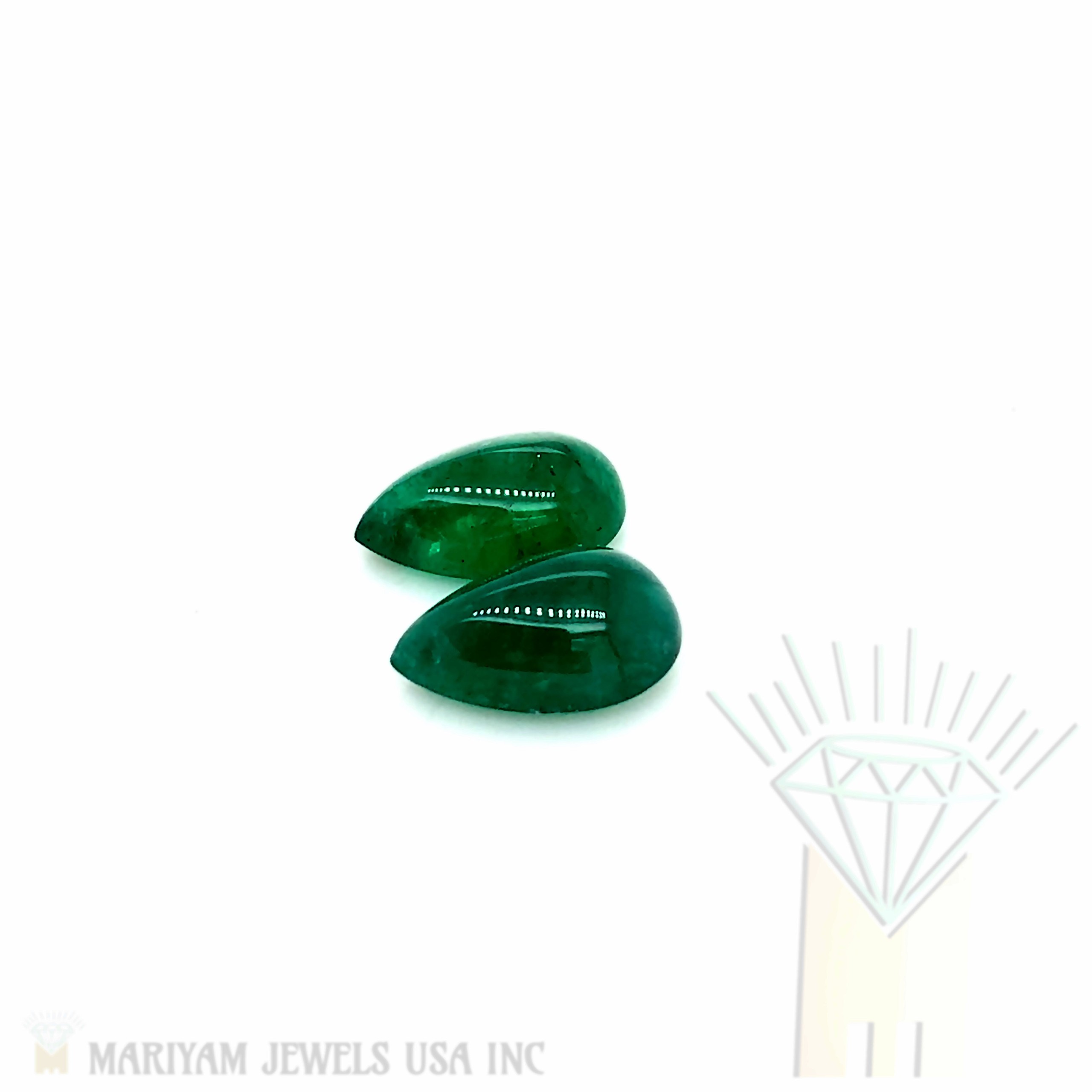
Emerald is the stone most people ask about first, and the one most often bought on colour alone. Colour matters more in emerald than in almost any other gemstone - but a stone judged only on colour will usually disappoint once it is set.
This guide walks through what to look at, in the order a gemmologist looks at it.
Colour comes first - but colour is three things, not one
When the trade describes an emerald's colour it is describing three separate qualities at once:
- Hue - the position on the spectrum. True emerald green sits between blue-green and yellow-green. Stones that lean too far yellow read as pale; stones that lean too far blue can be mistaken for sapphire.
- Tone - how light or dark the stone is. The most desirable emeralds are medium-to-dark; very pale stones lose presence, and very dark stones go flat and opaque.
- Saturation - the intensity of the colour. This is what separates a vivid stone from a muted one, and it has more effect on value than size does.
A useful test: look at the stone against a plain white sheet of paper in daylight, not under a shop lamp. If the green still reads as green - rather than grey or washed out - the saturation is real.
Clarity: the jardin is not a flaw
Almost every natural emerald contains some inclusion. The trade calls this the jardin - French for garden - because under magnification the internal wisps and needles can look like foliage.
Two things follow from that:
- An emerald described as "eye-clean" means no inclusions visible without magnification. That is a high grade for emerald, not a baseline.
- Perfect clarity in a natural emerald should prompt questions, not excitement. Flawless stones exist, but they are rare enough that the price should reflect it.
What you want to avoid is not inclusions in themselves, but inclusions that reach the surface, sit directly under the table facet, or visibly reduce transparency. A jardin that stays in the body of the stone and does not dull it is part of the character of the material.
Cut: the part most buyers skip
Cut governs how much light comes back out of the stone. An emerald with beautiful colour and a shallow or badly proportioned cut will look dull in the hand, because light leaks out of the back instead of returning to your eye.
Because emerald rough is expensive, cutters often sacrifice proportion to save weight - a practice called native cutting. It is worth checking for:
- Window - a washed-out, see-through area in the middle where the pavilion is too shallow.
- Extinction - dark, dead patches where the stone is too deep and light cannot escape.
- Off-centre table - the flat top facet not sitting over the centre of the stone, which throws the symmetry off when set.
Treatment: what to ask
Most emeralds on the market have been treated. The common treatment is filling surface-reaching fractures with a colourless oil or resin to improve clarity. This is accepted trade practice, but it must be disclosed, and it affects how the stone should be cleaned - filled emeralds should never go into an ultrasonic cleaner or a steam cleaner.
Ask directly: is the stone treated, and with what? A reputable seller will tell you. An untreated emerald is not automatically better - it is simply rarer, and priced accordingly.
Carat weight is not size
Emerald has relatively low density, so a one-carat emerald looks larger than a one-carat sapphire or ruby. Do not compare carat weights across different gemstone families; compare the millimetre measurements instead, which are usually quoted alongside the weight.
For a ring stone, the practical question is not weight but face-up size - how much of the finger the stone covers. A 7×5 mm oval is a flattering, wearable size; a 9×7 mm oval is a statement.
A short checklist before you buy
- Look at the stone in daylight, not under a spotlight.
- Ask for the hue described plainly - green, bluish-green, or yellowish-green.
- Turn the stone over and check for a window in the middle.
- Ask whether it is treated, and with what.
- Ask for the millimetre dimensions, not only the carat weight.
- If a certificate matters to you, ask which laboratory issued it.
Browse the current emerald collection, or read the gemstone education guide for the four C's in more depth.
Related posts
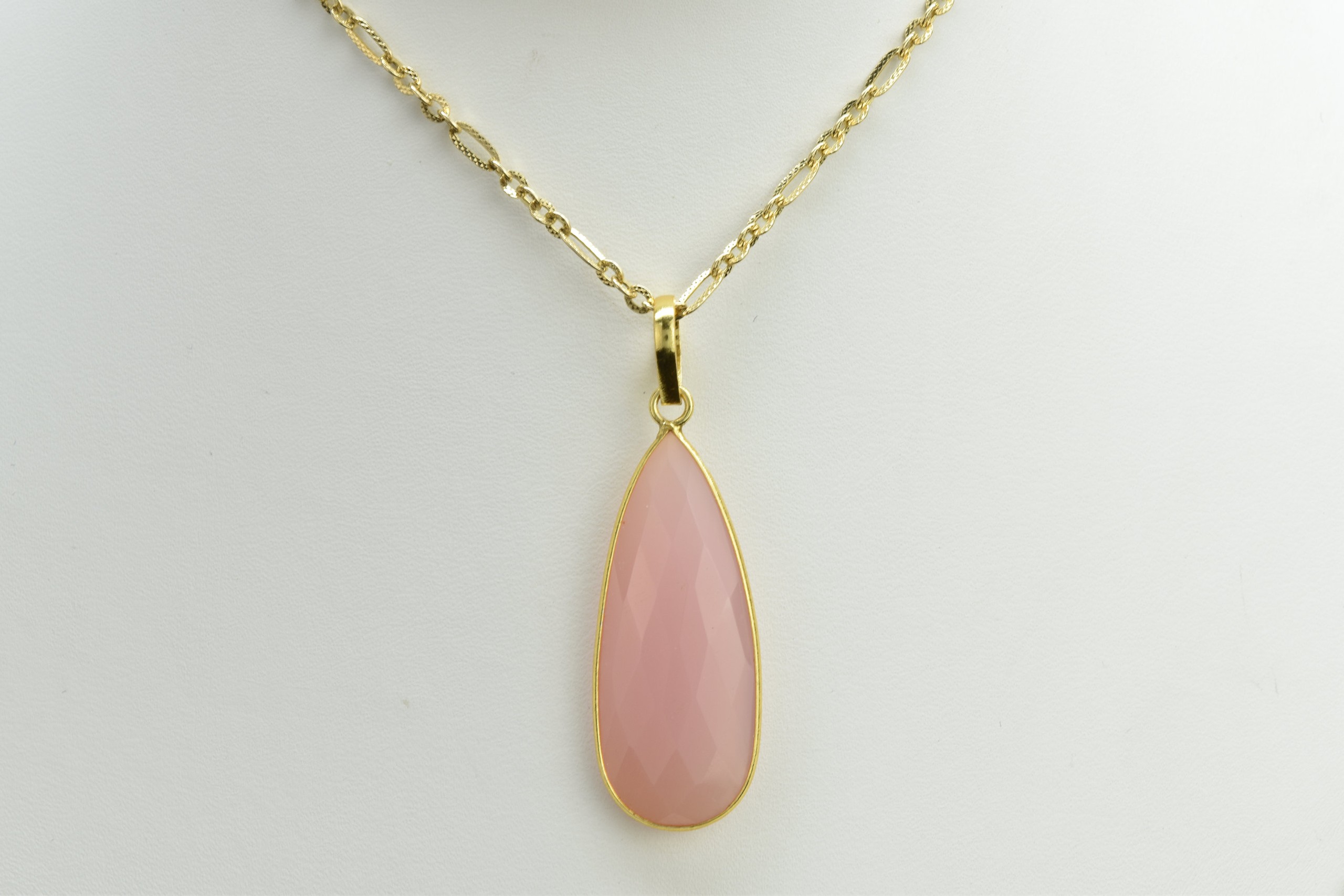
Loose Gemstones or Finished Jewellery: Which Should You Buy?
A loose stone lets you choose the gem and the setting independently. A finished piece is usually better value. Here is how to decide which you want.
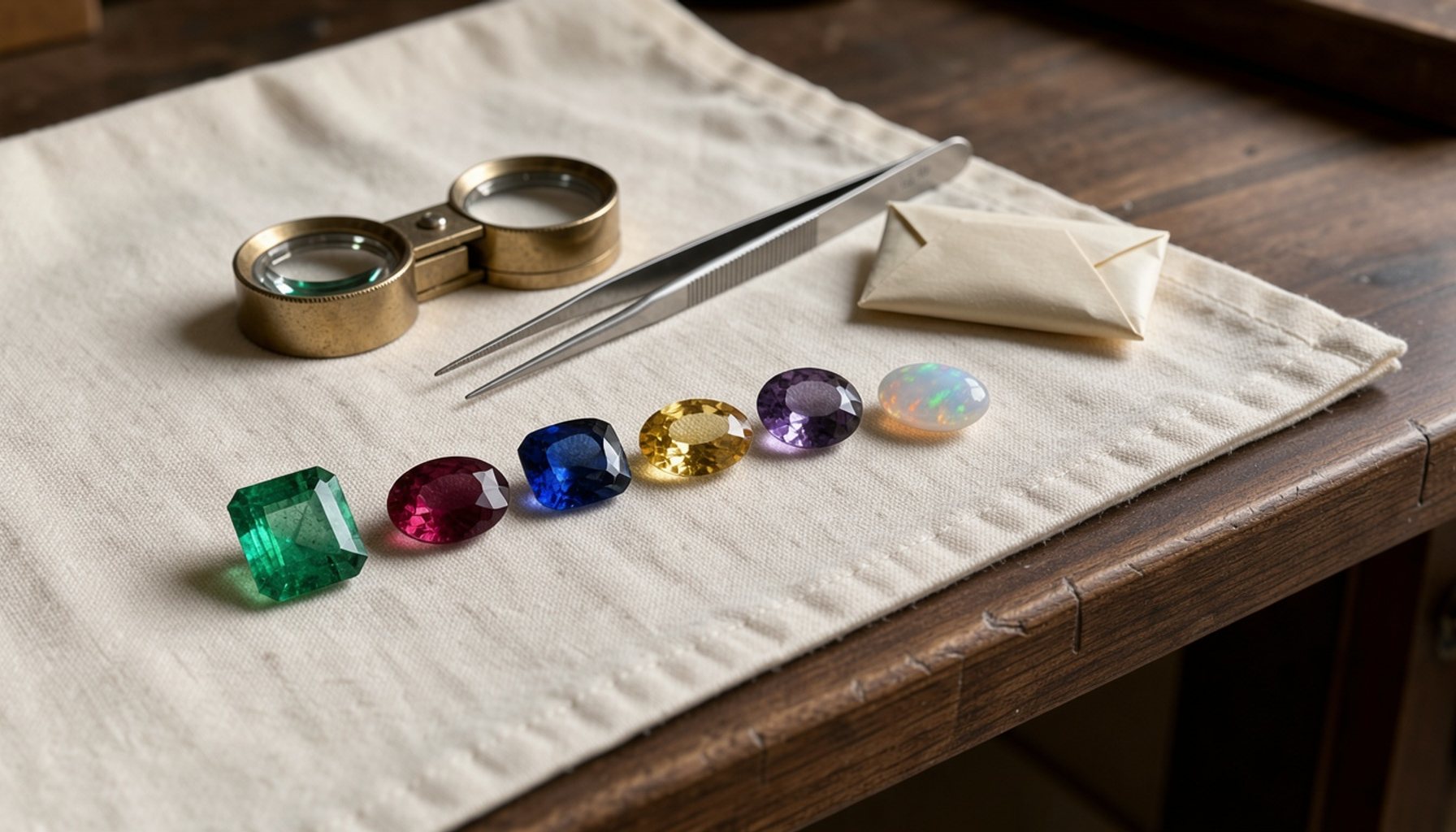
The 4 Cs of Gemstones: Colour, Cut, Clarity and Carat Weight
Colour, cut, clarity and carat weight decide what a gemstone is worth. What each one means, how the trade judges it, and what to check before you buy.
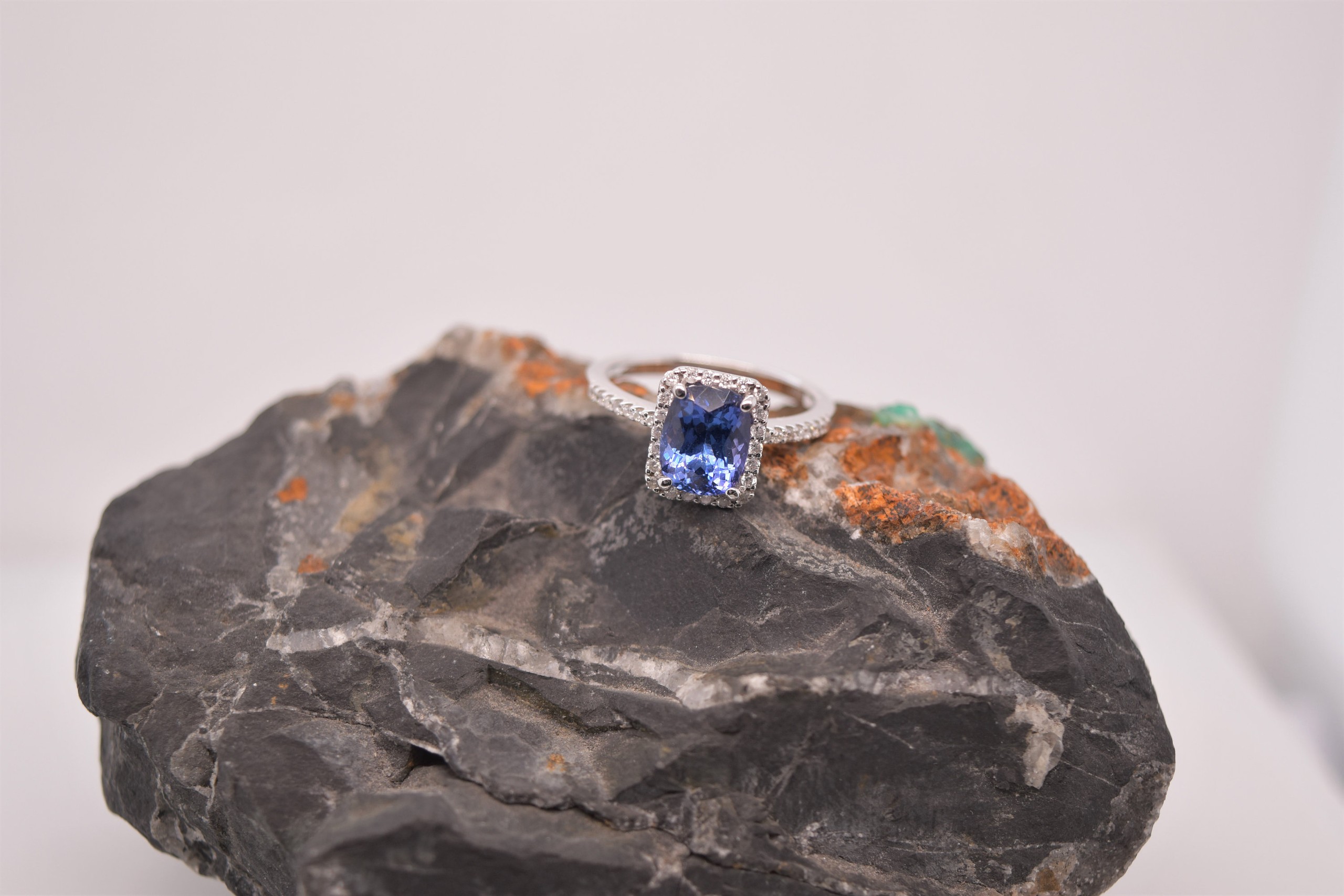
Tanzanite: The Rarest Gemstone on Earth
Found in a single square mile of northern Tanzania and nowhere else on earth, tanzanite is a thousand times rarer than diamond. Here is what makes it different.