The 4 Cs of Gemstones: Colour, Cut, Clarity and Carat Weight
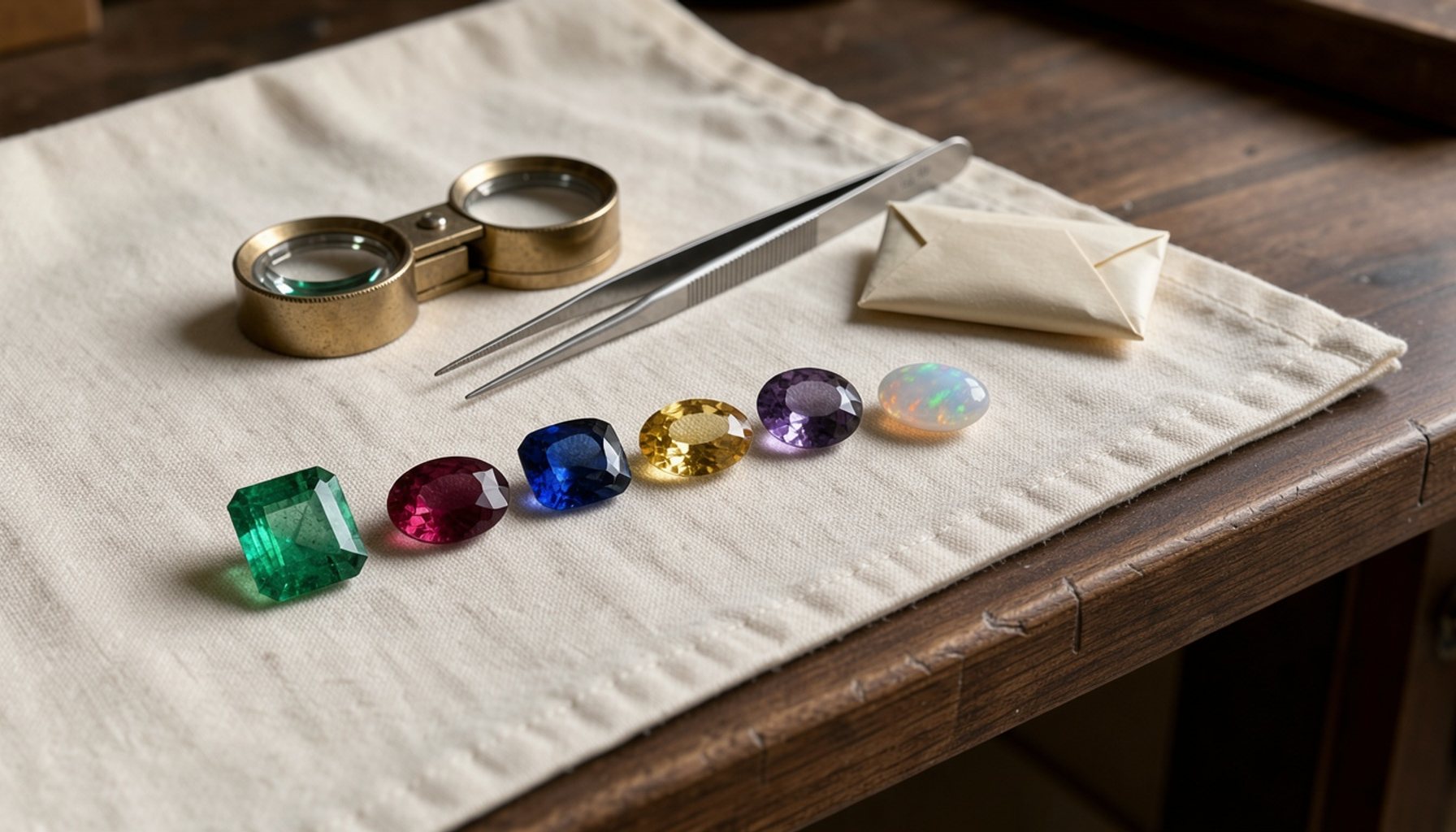
Every gemstone - an emerald, a ruby, an opal, a strand of amethyst beads - is judged on the same four things: colour, cut, clarity and carat weight. These are the four Cs, and they are the difference between choosing a stone and guessing at one.
Diamonds have a fifth C, certification, because one laboratory system grades every diamond to the same rules. Coloured stones do not work that way, which is exactly why the four below are worth understanding properly. Here they are, in the order a gemmologist looks at them, and what each one does to the price.
Why coloured stones are not graded like diamonds
Diamond grading is standardised: one vocabulary, one scale, a certificate that means the same thing to a dealer in New York and a cutter in Antwerp. Coloured gemstones have no such scale. There is no authority that will tell you this ruby is a 7 and that one a 6, because the qualities that make a ruby valuable do not collapse into a single number.
What does exist is a set of qualities that a trained eye assesses together - colour above all, then cut, then clarity, then weight. Learning to read those four is more useful than chasing a grade, and it is the only way to judge a stone from a photograph.
Colour: judged on three things at once
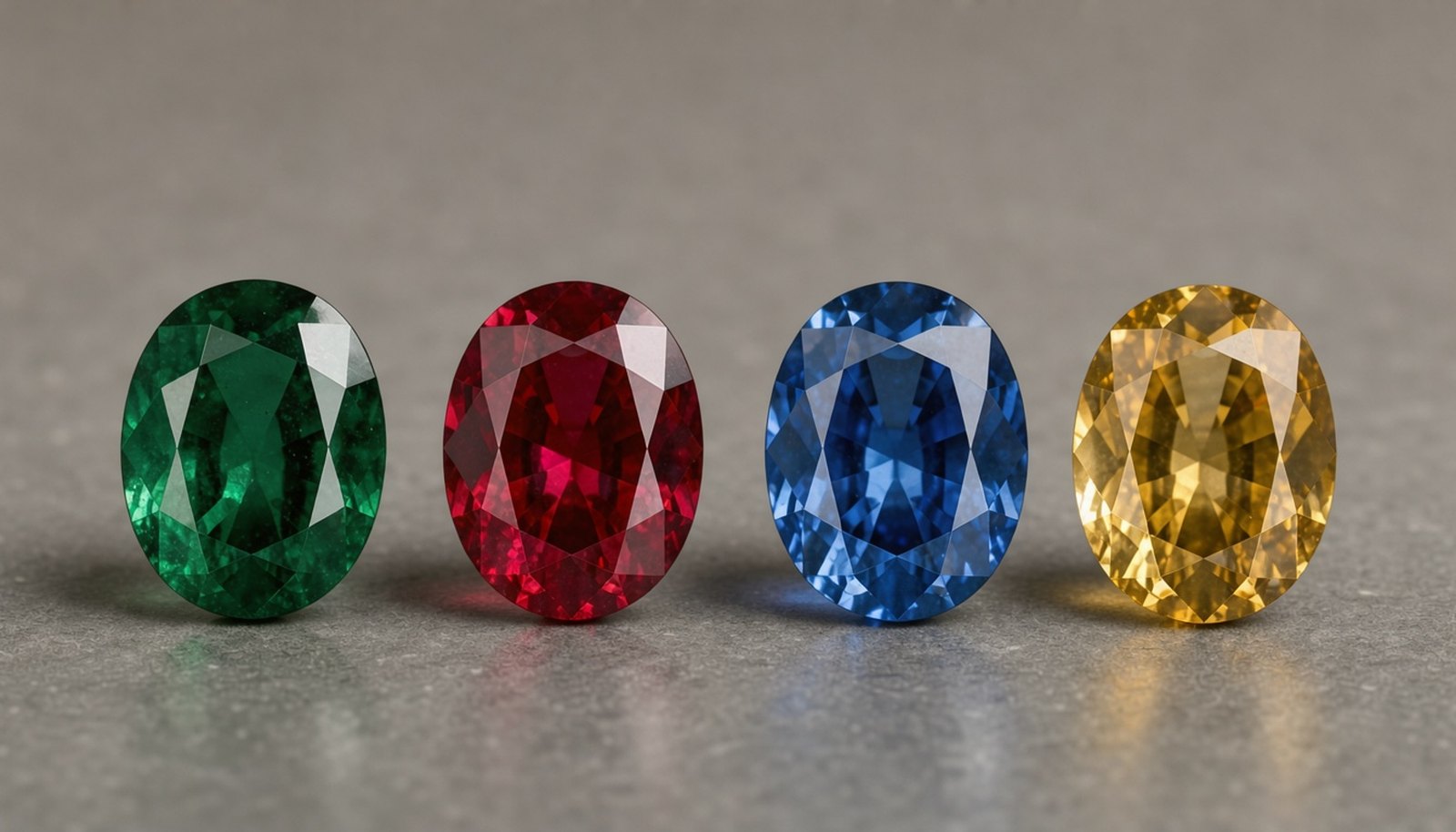
Colour is the single largest driver of value in a coloured gemstone. A stone with superb colour and modest clarity is worth more than a flawless stone with weak colour - which is the opposite of how most people instinctively shop.
When the trade describes colour it is describing three separate qualities at the same time. Separating them is the whole skill.
Hue
Hue is the position on the colour spectrum - what the colour actually is. Ruby is red; emerald is green; sapphire is blue. The complication is that almost no stone sits at the pure point. An emerald can lean blue-green or yellow-green; a ruby can lean orange or purple. Where a stone sits on that axis decides whether it looks like the gemstone it is supposed to be.
Tone
Tone is how light or dark the stone is - the range from washed-out to near-black. Every gemstone has a tone range that flatters it. Pale tanzanite looks watery; very dark emerald goes opaque and stops performing. The best stones land in the middle-to-dark part of the range, where the colour still has depth without turning flat.
Saturation
Saturation is intensity, and it has more effect on price than size does. A small, vividly saturated stone beats a large, muted one almost every time. This is the quality that separates a stone that looks alive from one that looks like coloured glass.
There is one question that gets to saturation faster than any other: does it look grey? Grey is the tell. A stone with weak saturation reads greyish or washed out rather than pure in its own hue, whatever the hue happens to be.
How to judge colour honestly
Look at the stone in indirect daylight, against a plain white sheet of paper - not under a jeweller's lamp, and not on a screen with the brightness turned up. Lamps add colour the stone does not have, and every gemstone looks magnificent under the right light. Daylight on white paper is the least flattering test there is, which is exactly why it is the useful one.
Cut: how much light comes back out
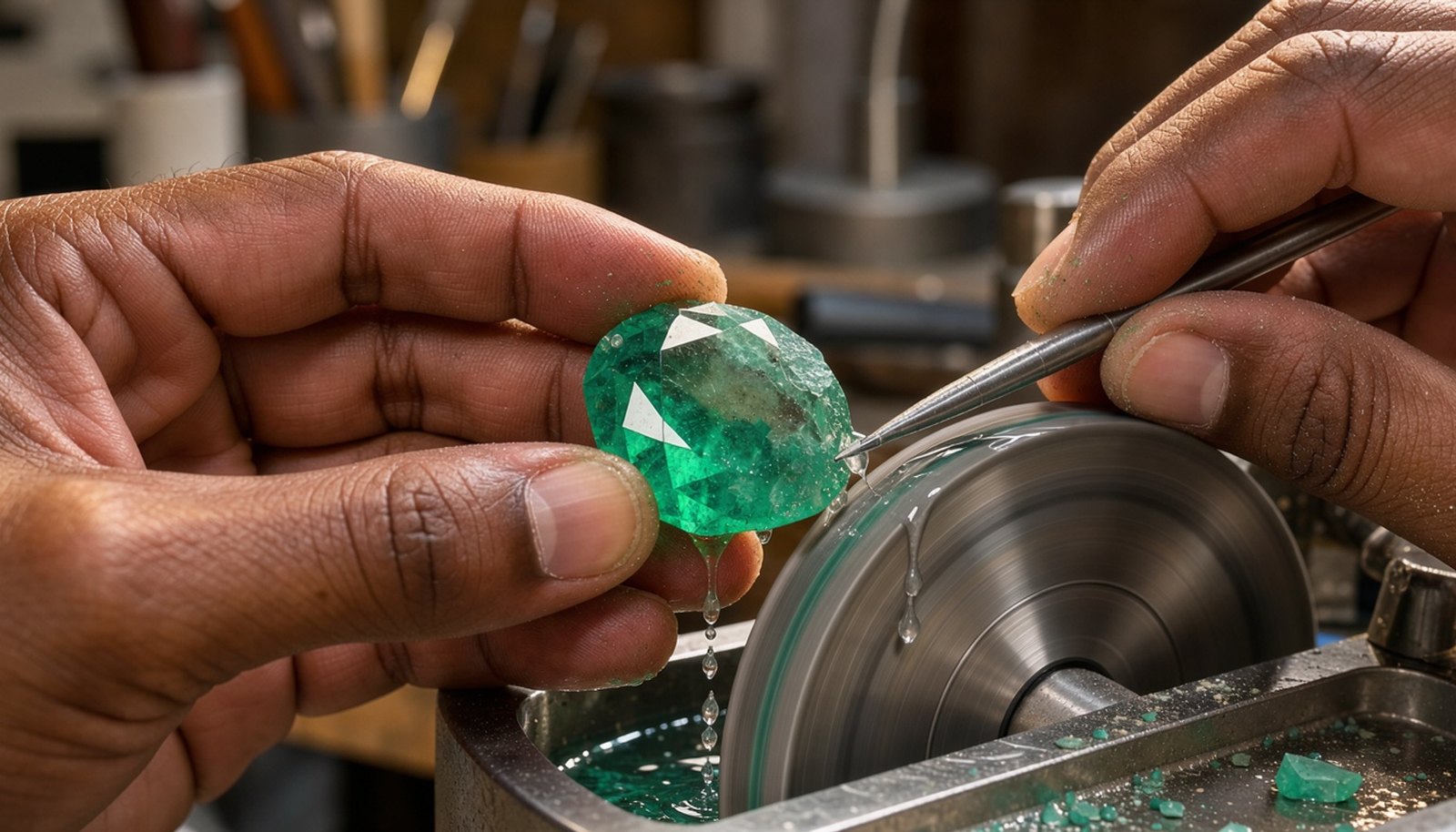
Cut is not shape, and the two get confused constantly. Shape is the outline - oval, cushion, emerald-cut, pear, marquise. Cut is the arrangement and proportion of the facets underneath: how the stone is engineered to take light in through the crown, bounce it off the pavilion, and return it through the table.
What a good cut does
A well-cut stone is bright across its whole face, with no dead patches. Two flaws are worth learning to spot, because both are visible without any equipment:
- A window - a see-through, washed-out area in the middle, where you can read the page underneath. The pavilion is too shallow and light is passing straight through instead of coming back.
- Extinction - dark, lifeless patches, usually at the edges. The angles are too steep and light is leaking out the sides.
Rock the stone gently under a light. If the brightness stays even as it moves, the cut is doing its job. If it flashes bright then drops to dark, it is not.
The five-grade scale
Grading reports commonly express cut on a five-step scale, from excellent down to poor. For coloured stones that scale is not universal - laboratories and dealers apply their own criteria, and there is no single body enforcing a definition. Treat any published cut grade as a starting point, then judge brightness, windowing and extinction for yourself.
Also check the proportions physically: an oval with one shoulder wider than the other, or a girdle that thins to a knife edge at the ends, will look wrong once set and chip more easily in wear.
Shape follows the rough
Cutters are not handed a template. They are handed a piece of rough with a colour zone inside it, and they shape the stone to keep as much weight as possible while centring the best colour. That is why two stones of identical carat weight can measure completely differently - and why the emerald cut, which wastes the least rough, is so common in emerald.
Clarity: inclusions are the signature of a natural stone
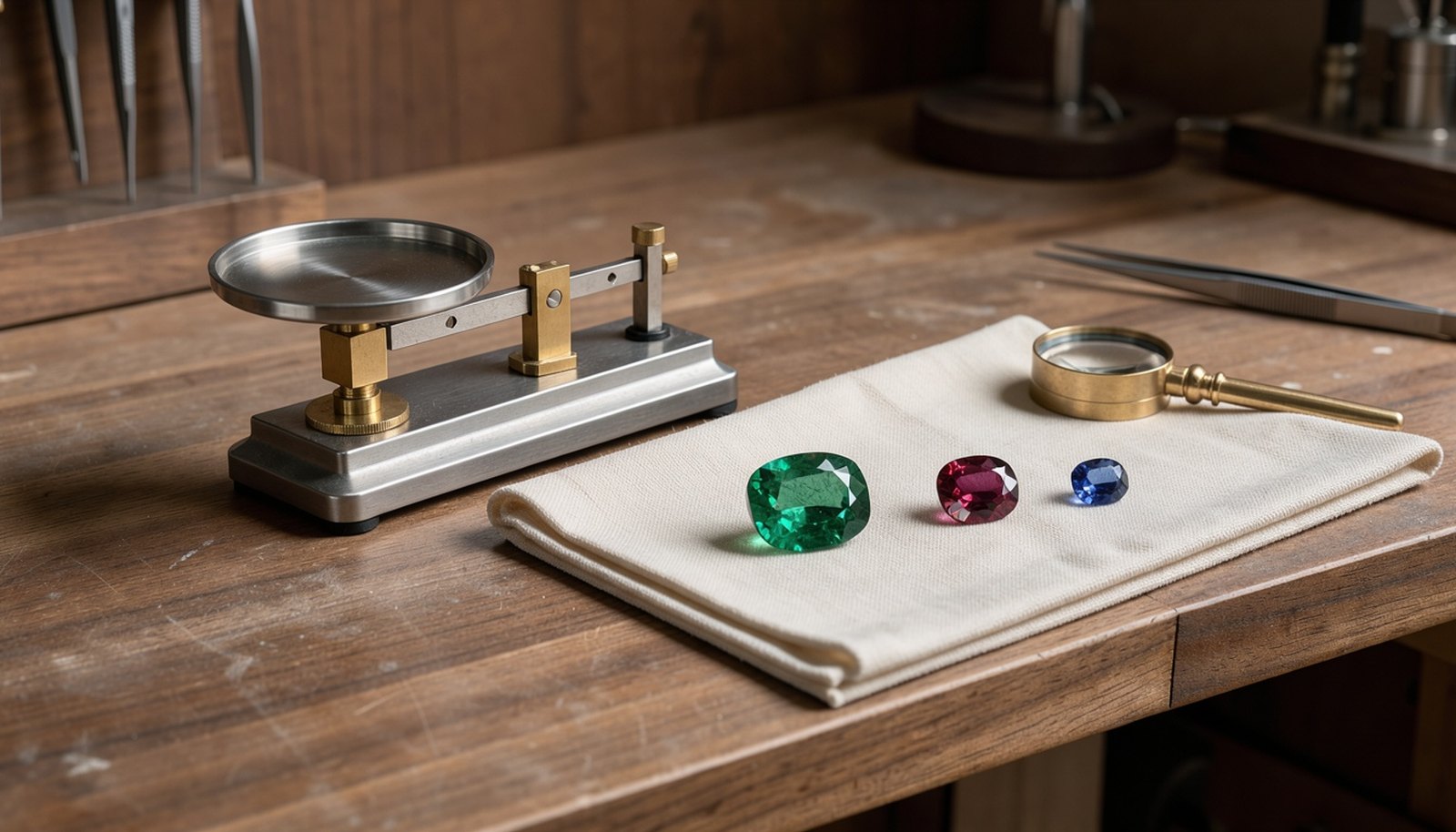
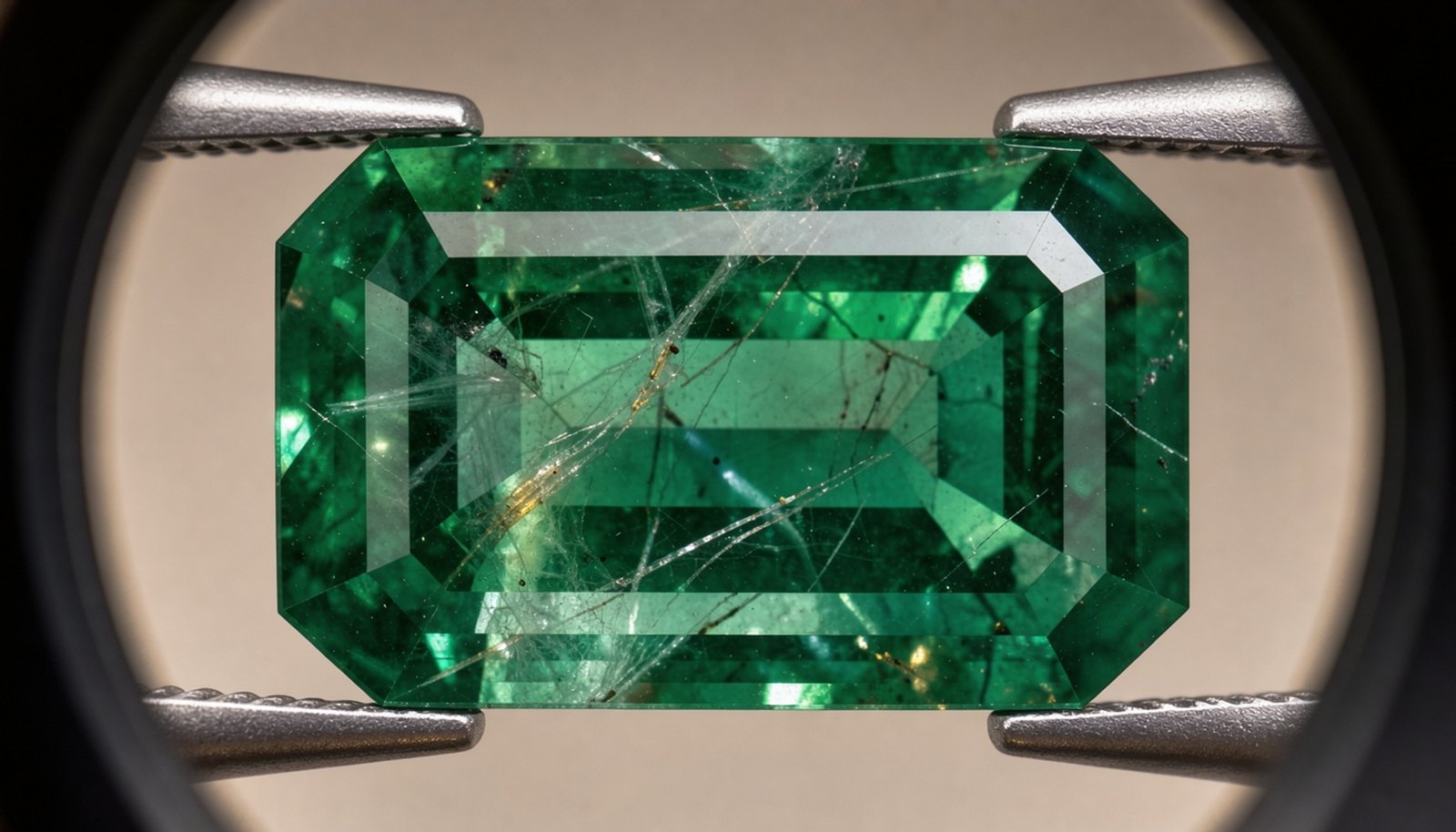
Almost every natural gemstone contains inclusions - crystals, clouds, fine needles, feathers, tiny tension fractures. They formed with the stone, deep underground under heat and pressure, and no two sets are alike. Far from being a defect, they are one of the ways you tell a natural stone from a synthetic or a piece of glass.
A stone with no inclusions at all is worth a second look. It is either extraordinarily rare, or it did not come out of the ground.
Eye-clean is the standard that matters
Not loupe-clean - eye-clean. If you cannot see an inclusion with the naked eye, holding the stone at reading distance in ordinary light, it is eye-clean, and for a stone you intend to wear that is usually enough. Loupe-clean is a collector's standard, and chasing it in a coloured stone means paying a large premium for something nobody will ever see.
Where an inclusion sits matters more than how big it is
A small inclusion directly under the table will be the first thing anyone notices, because that is where the eye goes. A larger one tucked near the girdle may be invisible when set. The two to avoid are a crystal sitting under the table where it breaks up the light, and any fracture that reaches the surface - that one is a durability problem, not a cosmetic one.
Expectations differ enormously by stone
Laboratories sort coloured stones into clarity types, and the type sets what is realistic to expect. Emeralds are Type III: inclusions are near-universal, and a completely clean emerald of any size is a genuine rarity. Aquamarine is Type I, routinely clean, and an aquamarine full of visible inclusions should make you look twice at the price. Judging an emerald by aquamarine standards is how people talk themselves out of good stones.
Carat weight: weight, not size
A carat is a fifth of a gram - 200 milligrams, so five carats make one gram. Unlike most things you buy, gemstones are sold by weight rather than by size, and that distinction catches people out.
Density: why a one-carat sapphire looks smaller than a one-carat opal
Every gemstone family has its own density, so the same weight occupies a different amount of space. Sapphire and ruby are dense, around four times the weight of water; emerald and quartz sit near two-point-seven; opal is lighter still, close to two. Set a one-carat sapphire beside a one-carat opal and the opal looks considerably larger - because it is.
Millimetres tell you more than carats
If size on the hand matters to you, ask for the measurements in millimetres rather than the weight. A stone described as 8 × 6 mm tells you how it will sit in a setting; 1.62 carats does not. Both numbers together tell you whether a stone is well-proportioned or deep and narrow.
Price per carat is not a straight line
Two carats of fine emerald cost considerably more than twice one carat, because large clean rough is disproportionately rare. The same logic runs in reverse below about half a carat, where prices fall away quickly. If you are working to a budget, the smart money is often just under a size threshold rather than exactly on it.
How the four work together
None of these qualities is judged in isolation. A superb colour in a badly proportioned stone looks dull, because the cut is failing to return the light that carries the colour back to your eye. A flawless stone with weak saturation looks like expensive glass. And a large stone with mediocre cut and colour is simply a large disappointment.
The practical order is this: find the colour you want, check that the cut makes the most of it, accept a realistic level of clarity for the stone you are buying, then decide what weight you can afford at that standard. Reverse the order and you end up paying for size in a stone nobody enjoys looking at.
Know your stone
Each gemstone family has its own personality - its own colour range, its own typical clarity, its own idea of what "good" looks like. These guides go stone by stone:
Emerald
Green beryl, coloured by chromium and vanadium, generally included and all the better for it. Read the emerald guide, or browse natural emeralds.
Ruby
Red corundum, where colour decides value more than any other factor and fine stones are genuinely rare. Read the ruby guide, or browse rubies.
Sapphire
Corundum in every shade but red - the cornflower blues, the yellows and greens, the rare padparadscha. Read the sapphire guide, or browse sapphires.
Amethyst
Purple quartz, coloured by traces of iron, and one of the few stones where a large fine example is genuinely reachable. Read the amethyst guide, or browse amethyst.
Opal
The only gemstone that shows play-of-colour - a moving flash of spectral colour that no photograph fully captures. Read the opal guide, or browse opal.
Citrine
Yellow to amber quartz with a history running back to the Hellenistic age. Read the citrine guide, or browse citrine.
A five-minute checklist before you buy
- Ask for daylight photographs. A stone that only looks right under a lamp will disappoint you at home.
- Look for grey. It is the quickest read on weak saturation, in any stone.
- Rock it under a light. Even brightness means a good cut; dark patches or a see-through centre do not.
- Hold it at reading distance. Eye-clean is the standard - a loupe will always find something in a natural stone.
- Get the millimetres. Weight alone will not tell you how the stone sits in a setting.
- Ask about a report. For an expensive stone, request a report from a recognised laboratory and check that the report number matches the stone.
Once the stone is yours, the last thing that changes its appearance is how you look after it. Our gemstone care guide covers cleaning and storage, and if you are still deciding what form to buy in, loose gemstones or finished jewellery walks through the trade-offs. Or start from the full gemstone collection.
Related posts
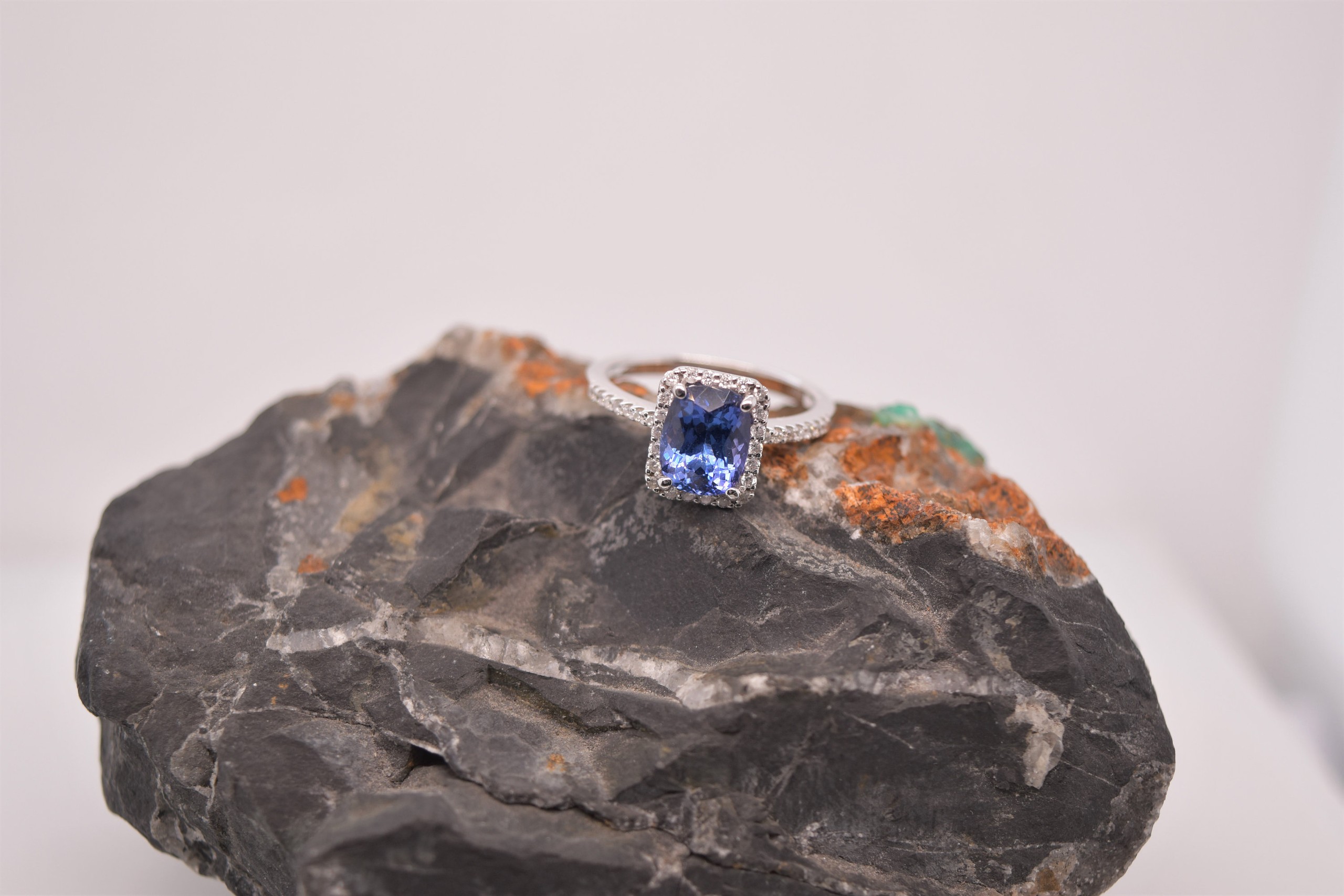
Tanzanite: The Rarest Gemstone on Earth
Found in a single square mile of northern Tanzania and nowhere else on earth, tanzanite is a thousand times rarer than diamond. Here is what makes it different.
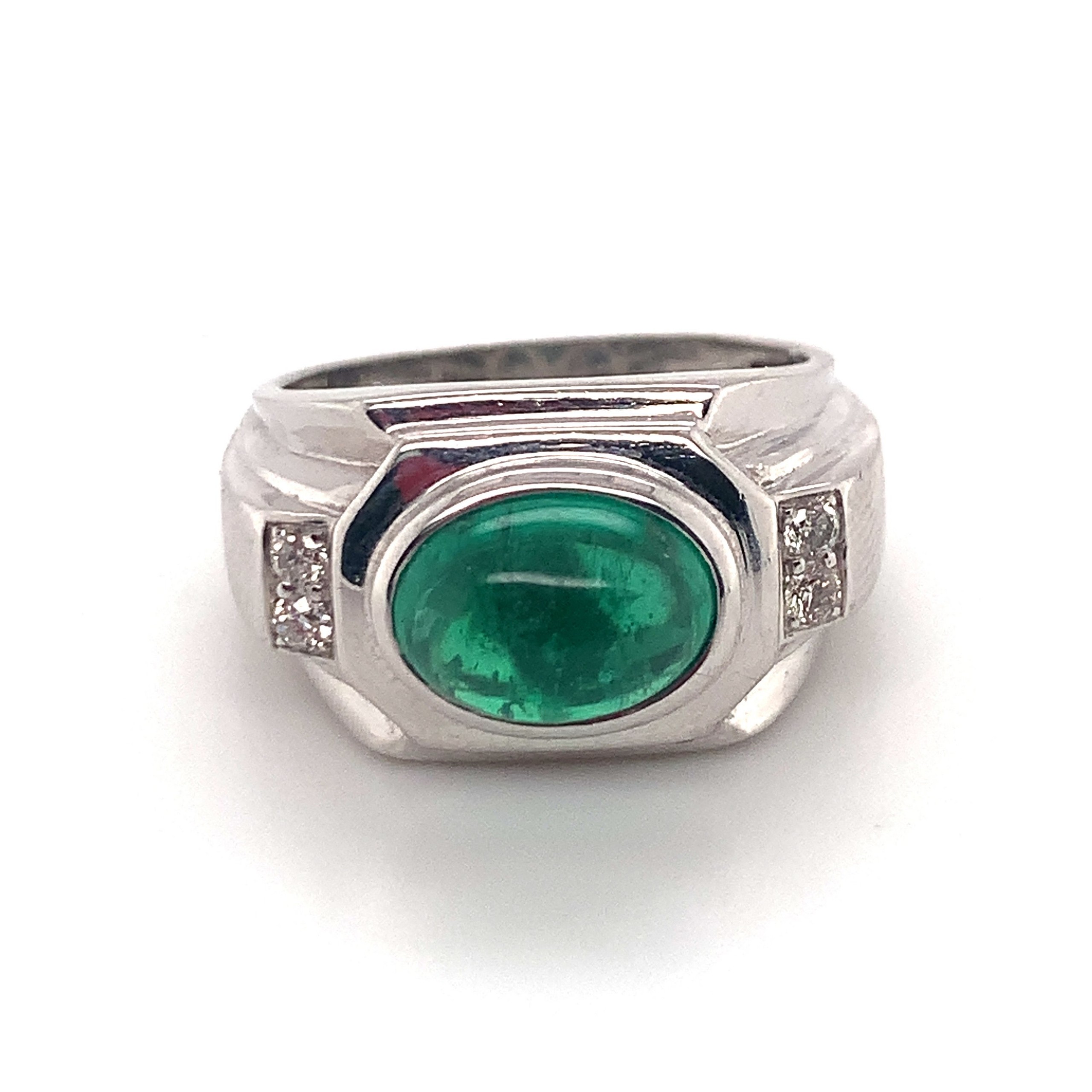
How to Care for Gemstone Jewellery
A sapphire and an opal need completely different handling. Here is how to clean and store gemstone jewellery without damaging it.
Emerald Buying Guide: How to Judge Colour, Clarity and Cut
Emeralds are graded on the same four C's as any gemstone, but the balance between them is different. Here is how to read a stone before you commit.