Birthstones by Month: The Complete Guide
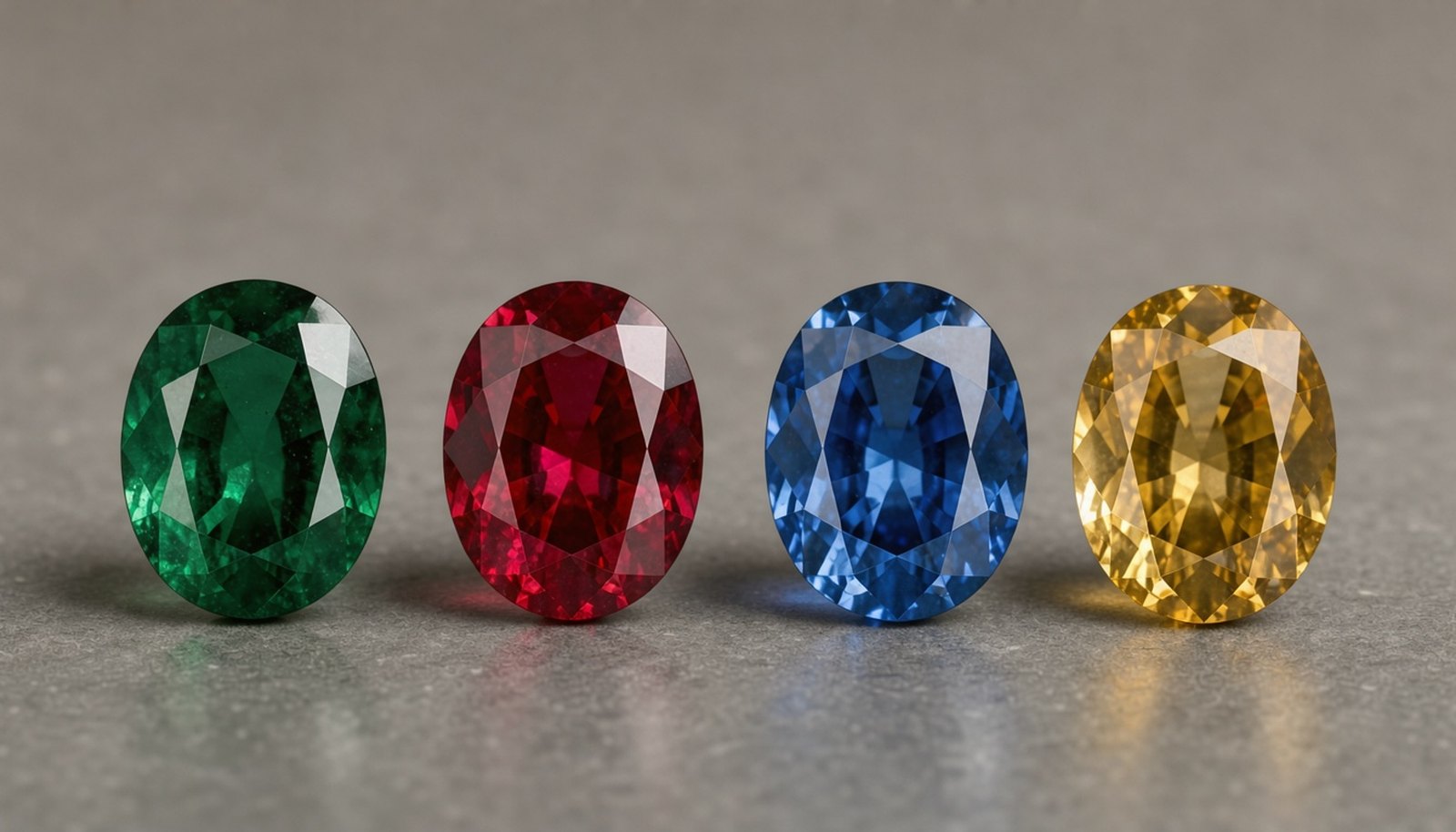
Birthstones are one of the few traditions in jewellery that almost everyone knows about and almost nobody knows the detail of. Most months have two or three recognised stones: a modern list, a traditional one, and sometimes an alternative for a specific meaning.
Here is the full set, with the colour each month is associated with.
January - Garnet
Deep red, though garnet actually occurs in almost every colour except blue. The red pyrope and almandine varieties are the ones the month is known for. Garnet is hard enough (6.5-7.5) for regular wear.
February - Amethyst
The purple variety of quartz, and one of the most affordable birthstones. Colour ranges from pale lilac to deep violet; the deepest grades are called Deep Siberian in the trade. Amethyst is 7 on the Mohs scale, so it is fine in earrings and pendants and reasonable in rings.
March - Aquamarine
Pale blue to blue-green beryl, and a cousin of emerald. Colour should be clear and even; stones that are too pale go grey face-up. It is 7.5-8 on the scale and takes a polish beautifully.
April - Diamond
The hardest gemstone at 10 on the Mohs scale, and the only birthstone graded on a formal, laboratory-defined scale. Diamond also comes in colours - yellow, pink, blue, brown - which are graded separately from the colourless range.
May - Emerald
The most valuable of the beryls, and the birthstone most buyers need a guide for, because clarity grading in emerald differs from every other stone. Read the emerald buying guide before choosing one.
June - Pearl, Moonstone and Alexandrite
This month has three, and they could hardly be more different. Pearl is organic and soft (2.5-4.5) and needs care; moonstone shows a floating blue sheen called adularescence; alexandrite changes colour between daylight and incandescent light, from green to red.
July - Ruby
Red corundum, and the most valuable coloured stone in the trade when the colour is right. The ideal is a pure, saturated red with a slight blue modifier - traditionally called pigeon's blood. Ruby is 9 on the Mohs scale, making it one of the best birthstones for a ring worn daily.
August - Peridot and Spinel
Peridot is one of the few gemstones that occurs in only one colour, an olive-to-lime green. Spinel was added to the modern list in 2016; for centuries red spinel was mistaken for ruby, and it remains considerably better value for a vivid red stone.
September - Sapphire
Corundum again, and available in every colour except red - which is ruby. Blue sapphire is the best known, but pink, yellow, green, and the rare padparadscha (a pink-orange) are all sapphire. At 9 on the Mohs scale it is the most practical of the coloured birthstones.
October - Opal and Tourmaline
Opal is the only gemstone that shows play-of-colour - flashes of spectral colour that move as the stone turns. It contains water, typically 5-10%, which means it needs more care than any other stone on this list. See the opal guide for how to treat it. Tourmaline is the alternative, and occurs in more colours than any other gem family.
November - Topaz and Citrine
Both are yellow-to-orange stones, and both are November birthstones. Citrine is the more affordable and the more common; topaz in its imperial pink-orange form is the rarer and more expensive of the two. See the citrine guide.
December - Turquoise, Tanzanite and Zircon
Turquoise is opaque and relatively soft, and traditionally stabilised to hold its colour. Tanzanite is the modern addition, and the rarest stone on this entire list - read the tanzanite guide. Zircon is the traditional stone and is not the same material as cubic zirconia, despite the similar name.
Choosing a birthstone gift
- For a ring worn every day - sapphire, ruby, or diamond. All are 9 or above and shrug off daily wear.
- For an occasional piece - emerald, tanzanite, opal, and pearl are all beautiful and all better suited to earrings, pendants, or dress rings.
- For a first piece - amethyst, citrine, and peridot are the most affordable way into a genuine coloured stone.
Browse all natural gemstones by stone type, or start with rings if you already know the month.
Related posts
How to Care for Gemstone Jewellery
A sapphire and an opal need completely different handling. Here is how to clean and store gemstone jewellery without damaging it.
The 4 Cs of Gemstones: Colour, Cut, Clarity and Carat Weight
Colour, cut, clarity and carat weight decide what a gemstone is worth. What each one means, how the trade judges it, and what to check before you buy.